China Top 10 Furniture Hardware Essentials for Buyers

Time:2026-11-02 Author:Sophia
0%

Choosing the right furniture hardware can shape how a cabinet feels, how smoothly a drawer moves, and how long a product lasts. For buyers, furniture hardware essentials are not just small parts on a specification sheet. They include hinges, drawer slides, handles, connectors, locks, furniture legs, casters, gas lifts, and other fittings that affect daily use. Small details matter. A soft-close hinge may sound quiet in a showroom but behave differently after repeated use or installation on a heavier door.

China offers a broad range of furniture hardware suppliers, from specialist factories to companies with wider product catalogs. Quality and service can vary, so buyers should compare actual specifications rather than rely on product photos or broad claims. Check materials, dimensions, finish, load ratings, installation requirements, and available test information. Request samples when possible. Fit a hinge to the intended door, open and close a drawer, and inspect the coating under clear light. It is a simple check, but it can reveal issues a catalog will not.

This guide introduces ten practical hardware categories and explains what buyers should consider when sourcing them from China. It also looks at questions worth asking about customization, packaging, lead times, and quality control. No single component is best for every project. A low-cost option may work well for a basic unit, while a premium fitting may be justified in a frequently used kitchen. The right choice depends on the design, budget, and expected use—and sometimes the first sample will change your mind.
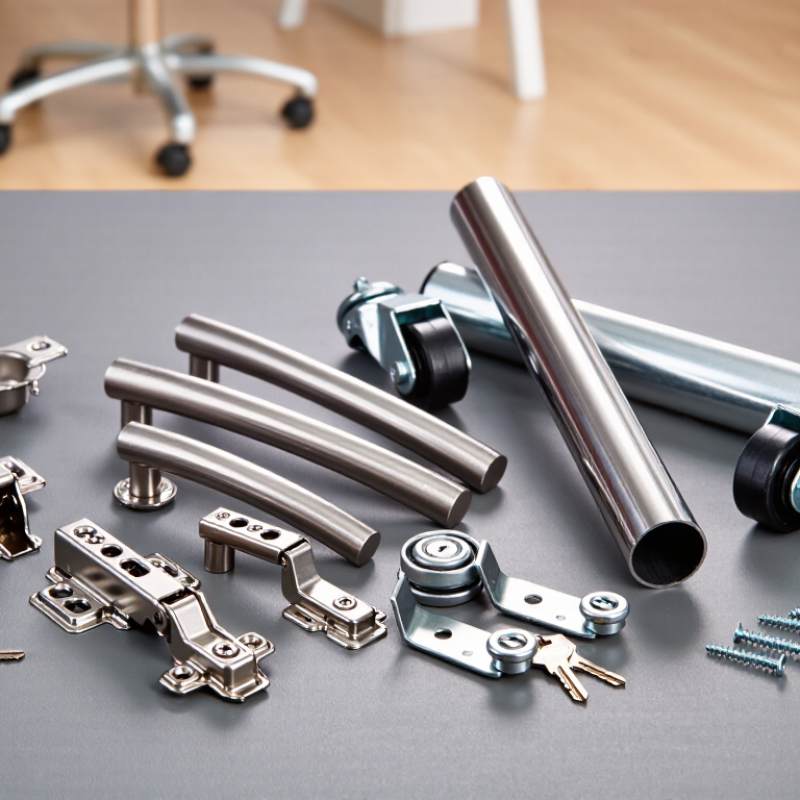
China Top 10 Furniture Hardware Essentials for Buyers

Furniture Hardware in China: Categories, Functions, and Buyer Criteria

China Top 10 Furniture Hardware Essentials for Buyers

Furniture Hardware in China: Categories, Functions, and Buyer Criteria

Furniture hardware covers more than visible handles. Hinges control door movement, while drawer slides support smooth opening and closing. Connectors hold cabinet panels together. Lift supports keep upward-opening doors in place, and adjustable feet help level furniture on uneven floors. Casters add mobility; locks, shelf supports, and edge fittings serve more specific needs.

Choose parts by function and furniture design, not by appearance alone. Check dimensions, mounting positions, material, finish, and stated load capacity. For moving parts, ask about cycle testing and request samples for repeated opening and closing.

A hinge that looks sturdy may still rub against a neighboring panel. Small fit problems matter. Confirm that the hardware matches the board thickness and installation method, and review packaging and quality checks with the supplier.

In China, suppliers may offer many configurations, but specifications can differ between similar-looking items. A neat catalog can still hide fit problems. I would not assume one sample proves every production batch; agree on inspection details before ordering.

The 10 Essential Hardware Types and Their Uses

China Top 10 Furniture Hardware Essentials for Buyers

The 10 Essential Hardware Types and Their Uses

Furniture hardware works best when matched to the load, material, and movement of each piece. Hinges connect cabinet doors and control their swing; drawer slides support drawers as they open. Handles and pulls provide a firm grip, while knobs suit smaller doors and drawers. Shelf pins hold adjustable shelves, so check that their diameter matches the pre-drilled holes. Measure twice.

Brackets reinforce corners or support shelves. Cam-lock connectors join flat-pack panels and allow disassembly. Leveling feet steady cabinets on uneven floors and help prevent rocking. Soft-close dampers slow doors or drawers near closure, but they must match the hinge or slide system. Lift supports hold upward-opening lids or cabinet fronts; select them for the panel’s weight and travel. Small parts matter. A poor fit can cause sagging, scraping, or loose joints.

Grand View Research estimated the global furniture market at USD 677.09 billion in 2022 and forecast a 5.0% compound annual growth rate from 2023 to 2030. This broad market estimate is not a hardware-performance measure, but it shows why durable, well-matched fittings deserve attention. Buyers should confirm dimensions, load ratings, material compatibility, and replacement availability. One caveat: product ratings alone cannot predict service life if installation or everyday use differs.

Materials, Finishes, Dimensions, and Performance Specifications

Furniture hardware should be specified as a working system, not a finish sample. Hinges, drawer slides, pulls, brackets, and fasteners must suit the panel thickness, load, and daily use. The USDA Forest Products Laboratory’s Wood Handbook places wood’s fiber saturation point at roughly 30% moisture content; below that point, moisture changes can cause dimensional movement. Leave suitable clearance and confirm screw length against the actual panel. Small details matter.

For exposed parts, compare material grade, coating, and test evidence. The Nickel Institute lists Type 304 stainless steel as typically containing about 18% chromium and 8% nickel, but composition alone does not promise corrosion resistance in every room. Ask for the tested finish, test method, and exposure duration; ISO 9227 salt-spray results are not a direct prediction of service life. Check slide extension, load rating, hinge opening angle, and cycle-test results against the intended cabinet. I would still recheck dimensions on a sample panel: catalog measurements can hide installation tolerances, and a few millimeters can change how a drawer closes.

How to Assess Chinese Suppliers and Verify Product Quality

China Top 10 Furniture Hardware Essentials for Buyers

How to Assess Chinese Suppliers and Verify Product Quality

Supplier assessment should begin with evidence, not a polished showroom. Grand View Research estimated the global furniture market at USD 766.2 billion in 2023, reflecting a large and varied supply chain. For hinges, drawer slides, and connectors, ask for material specifications, load ratings, production records, and inspection criteria. Check that certificates identify the actual factory and product range. A document alone proves little if it cannot be matched to the goods.

Request samples from normal production, not specially prepared pieces. Compare measurements against approved drawings, then test opening cycles, load performance, and surface finish under agreed conditions. For metal parts, ask for the coating method and relevant corrosion-test results. Review how the supplier handles defects, corrective actions, and batch traceability. A video call can show machinery and storage, but it cannot replace an independent factory audit or incoming inspection. Even a strong sample may not represent every batch.

Tips: Put tolerances and acceptance limits in writing. Keep a signed reference sample. Record test results by batch. Small detail, big difference. I would still recheck shipments: supplier claims and real-world consistency do not always line up.

Pricing, Customization, Lead Times, and Import Considerations

China Top 10 Furniture Hardware Essentials for Buyers

For China’s top ten furniture hardware essentials, price is only one signal. Hinges, drawer slides, handles, connectors, and lift systems vary by material, finish, load rating, and testing. Request a line-by-line quote. It should separate tooling, samples, packaging, and freight assumptions. A low unit price can hide costly finishing limits.

Tips: Send drawings, dimensions, order quantity, finish samples, and load requirements together. Ask for a pre-production sample. Check screw positions and movement by hand. Small differences matter.

Customization can change both cost and schedule. A new hole pattern may require a jig; a special coating may add curing time. Confirm what counts as an approved sample, and record tolerances in writing. Lead times should distinguish sample approval, production, inspection, and shipment. Allow extra time for revisions. Timelines can slip when artwork or color approval arrives late, so verify the schedule with each supplier. For imports, confirm carton dimensions, gross weight, product descriptions, and shipping terms before booking. Check destination requirements with a qualified customs professional. A quote is not a landed cost. One detail can change the math.

China Furniture Hardware: Typical Production Lead-Time Ranges

Indicative planning estimates for standard products, in calendar days. Actual lead times vary with order quantity, material availability, finishes, customization, and factory capacity.

Hinges, drawer slides, handles, locks, gas springs, shelf supports, bed fittings, cam connectors, wardrobe fittings, and leveling feet are common sourcing categories. Custom finishes or tooling can extend production time. Compare like-for-like specifications when evaluating prices, and confirm the destination-specific HS code, duties, and import requirements before placing an order.

FAQS

What should I check before choosing furniture hardware?

Match hinges, slides, pulls, and fasteners to panel thickness, load, and daily use. Small details matter.

Why does wood movement affect hardware installation?

Wood can change size as its moisture content shifts. Leave suitable clearance, and confirm screw length against the actual panel.

Does stainless steel composition guarantee corrosion resistance?

No. Composition alone cannot predict performance in every room. Ask for finish-test details and exposure duration.

Which performance details should I compare?

Check drawer extension, load rating, hinge opening angle, and cycle-test results. Match them to the cabinet’s intended use.

How can I verify dimensions before production?

Request a sample and test it on a panel of the same thickness. I would still recheck screw positions; catalog figures can miss installation tolerances.

What should a hardware quote include?

Request separate costs for tooling, samples, packaging, and freight assumptions. A low unit price may leave out finishing limits.

How can customization affect cost and timing?

A new hole pattern may need a jig, while a special coating may add curing time. Record tolerances and sample approval in writing.

What should I confirm before arranging an import shipment?

Verify carton dimensions, gross weight, product descriptions, and shipping terms. Confirm destination requirements with a qualified customs professional; a quote is not the full landed cost.

Conclusion

This guide introduces the main categories of furniture hardware used in cabinets, wardrobes, drawers, and other furniture, explaining how each component supports movement, fastening, adjustment, or stability. It highlights 10 furniture hardware essentials, such as hinges, drawer slides, handles, fasteners, and support fittings, and describes what buyers should consider when matching each type to a furniture design and intended use.

The article also explains how materials, surface finishes, dimensions, load capacity, and durability affect product performance. Buyers will find practical guidance on assessing Chinese suppliers, requesting samples and specifications, and checking product quality before placing an order. Finally, it covers pricing factors, customization options, production lead times, packaging, and import planning to help buyers make informed sourcing decisions.

Sophia

Sophia

Sophia is a dedicated marketing professional with an exceptional depth of knowledge about her company's products and services. With a keen understanding of market trends and customer needs, she crafts insightful blog posts that not only inform but also engage readers, enriching the company’s online......