How to Choose Stair Handrail Hardware Design Ideas

Time:2026-10-13 Author:Sienna
0%

Choosing stair handrail hardware is not merely a decorating decision. It affects grip, balance, visual rhythm, and daily confidence on every step. The right Stair handrail hardware design ideas should connect the rail, wall, posts, and surrounding architecture without creating sharp surprises.

In practice, small details often decide whether a staircase feels secure. A round rail should sit comfortably in the palm, while brackets need dependable fixing points and suitable load support. Solid timber, stainless steel, brass, and powder-coated metal each bring different textures, maintenance needs, and aging patterns. A brushed finish may hide fingerprints. Polished metal may reveal every mark. Measure the stair width, rail height, wall structure, and clearance before choosing a style. Do not trust appearance alone.

Good design also respects applicable building requirements and manufacturer instructions. Requirements vary by location, so a qualified installer or local authority should confirm dimensions, spacing, and fixing methods. This is not a dramatic step, but it prevents expensive changes later. Product testing, corrosion resistance, and documented load information can provide stronger evidence than attractive photographs.

There is room for personal judgment. A minimalist bracket can look elegant, yet feel too delicate beside a heavy oak rail. An ornate fitting may add character, but quickly become visual clutter. I have found that sample pieces viewed in daylight reveal flaws that drawings conceal. Even then, no choice is perfect. Consider who uses the staircase, how often it is cleaned, and how the hardware may age. These practical questions turn inspiring ideas into a safer, more durable result.
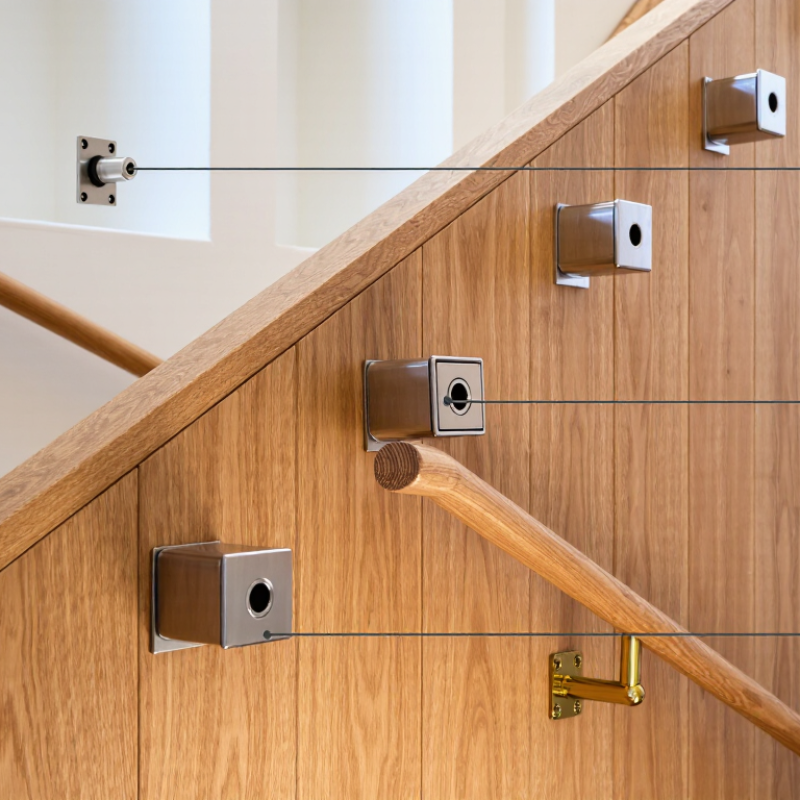
How to Choose Stair Handrail Hardware Design Ideas

Understanding Stair Handrail Hardware Types and Functions

Choosing stair handrail hardware starts with understanding its job. Hardware does more than hold a rail in place. It transfers pressure into the wall, posts, or newel structure. Wall-mounted brackets suit rails fixed beside a staircase. They need solid blocking behind drywall, not just surface anchors. Post-to-post connectors join rail sections between supports. They keep the line continuous and help control movement. Function matters.

Adjustable elbows handle changes in direction, especially at landings or steep transitions. Flanges cover connection points and create a cleaner finished edge. End caps close exposed rail ends, while internal joiners connect longer sections. Choose hardware according to rail material, diameter, weight, and hand clearance. Metal fittings can offer strong resistance, but compatibility matters. A fitting may look strong yet fit poorly. I once underestimated a slight angle change, and the finished joint felt awkward. That mistake reinforced the value of dry fitting every part.

Measure from the walking line, then verify handrail height against local building requirements. Check each fastener location for framing, masonry, or approved reinforcement. During installation, test the rail with firm downward and sideways pressure. It should feel stable, without rattling or visible gaps. Smooth edges are essential near corners and transitions. Use corrosion-resistant hardware in humid areas. Do not assume every similar finish performs equally. Product specifications and installation instructions deserve careful reading. A qualified installer can identify structural problems early. Some details are easy to miss. That is where careful review matters.

Assessing Safety, Building Codes, and Installation Requirements

How to Choose Stair Handrail Hardware Design Ideas

A handrail should look attractive, but safety must guide every hardware decision. Before choosing brackets, measure the stair width, handrail height, and clearance from nearby walls. Local building codes may specify mounting heights, graspable shapes, load resistance, and opening limits. These requirements differ by location, building type, and stair use. Check the current rules with your local authority or a qualified inspector.

Installation conditions matter just as much. A bracket fixed only to plasterboard may loosen under repeated pressure. Locate studs, masonry, or suitable blocking before drilling.

On a recent planning review, I noticed that a beautiful continuous rail would not fit near a tight landing. The design needed a joint and stronger support. Small details can change the entire installation. I would recheck every measurement, because drawings sometimes hide awkward corners.

Tips: Use hardware with clear load information and corrosion resistance for damp areas. Keep fasteners compatible with the wall material. Test the rail by applying firm, steady pressure after installation. Avoid sharp edges, loose joints, and decorative parts that interrupt a secure grip. If the stair serves children, older adults, or frequent visitors, prioritize easy grasping over visual complexity. A professional installer can identify hidden structural problems, though even expert work deserves a final code check.

Matching Hardware Designs with Staircase Styles and Materials

Choosing stair handrail hardware becomes easier when the staircase material leads the decision. A warm oak rail suits brushed brass or aged bronze fittings. These finishes repeat the wood’s softer character without looking overly polished. For painted timber, satin stainless steel creates a clean, controlled contrast. Keep the bracket profile slim when the stairway feels narrow. Bulky hardware can steal visual space. It happens often.

Glass stair panels need hardware that supports transparency rather than competing with it. Stainless steel or powder-coated metal usually provides a crisp edge around clear panels. Check panel thickness, fixing methods, and load requirements before selecting connectors. A fitting may look elegant online but feel oversized beside a thin rail. Measure the handrail diameter, wall distance, and fixing points on site. Professional installers also inspect the substrate, because plasterboard alone may not provide reliable support. This small check protects long-term stability.

Industrial stairs can accept darker steel, exposed bolts, and angular brackets. Traditional stairs often benefit from rounded details and quieter finishes. Match the hardware geometry to the balusters, newel posts, and landing trim. Color matching helps, but texture matters more under changing daylight. I once preferred a bright finish, then noticed fingerprints near the entrance. That detail changed the choice. View samples in morning and evening light, not only showroom lighting. Leave room for maintenance, especially around joints and concealed fixings. A beautiful design can still frustrate users if cleaning tools cannot reach it.

Comparing Durability, Maintenance, and Long-Term Performance

Choosing stair handrail hardware is less about appearance than surviving daily contact. In site inspections, I look at joints before finishes. A loose connector, even on a beautiful staircase, signals trouble. Solid stainless steel resists moisture and repeated cleaning well. Coated steel can perform reliably, but scratches expose weak areas. Timber fittings feel warm, yet they need closer moisture control. The right choice depends on traffic, humidity, and cleaning habits.

Durability starts at the connection. Hardware should fit the handrail precisely, with fasteners suited to the wall or stair structure. Over-tightening can damage softer materials. Under-tightening creates movement that worsens with every use. I test a rail by applying steady pressure, then checking for creaking or visible gaps. Small movement matters. For public or accessible stairs, verify load and safety requirements with a qualified professional. Maintenance should remain practical, with reachable screws, replaceable seals, and surfaces that do not trap dust.

Long-term performance also depends on inspection routines. Wipe exposed hardware with a mild cleaner, dry it, and watch for rust stains or dull patches. Avoid abrasive pads; they can make corrosion easier to start. One mistake deserves attention: choosing polished hardware for a busy public stair because it photographs well. Fingerprints and fine scratches appeared within weeks. A less reflective finish might have served better. Design should age honestly, not merely impress on installation day.

How to Choose Stair Handrail Hardware Design Ideas

Comparing durability, maintenance, and long-term performance across common handrail hardware materials

Scores use a comparative 1–5 index, where 5 represents better performance. Stainless steel generally provides the strongest balance of corrosion resistance, low maintenance, and long service life. Powder-coated carbon steel can perform well when its protective coating remains intact, while aluminum offers low maintenance but lower resistance to heavy mechanical loads. Brass requires more surface care, and zinc alloy is better suited to lighter-duty applications.

Selecting the Best Handrail Hardware for Your Staircase Project

Selecting the Best Handrail Hardware for Your Staircase Project

Handrail hardware should balance safety, structure, and visual proportion. The World Health Organization reports that falls cause about 684,000 deaths globally each year. That figure makes small installation details worth serious attention.

For a residential staircase, select brackets that match the rail’s weight and wall type. Solid timber, steel, and glass systems require different anchors. The 2024 International Residential Code generally places handrails 34 to 38 inches above stair nosings. Confirm local requirements before ordering. A brushed metal bracket may suit a modern interior, while concealed fixings create a quieter line. I have found that attractive hardware can still feel weak when the wall anchor is overlooked.

Tips: Test the grip before final installation. Use a rail sample, not only a screen image. Check bracket spacing, screw length, and stud locations. The U.S. Access Board recommends continuous, graspable handrails with clearances that support secure use. Avoid sharp edges near landings. One practical mistake is choosing hardware by finish first; durability should lead. Even experienced installers occasionally underestimate plasterboard movement, so a small pull test can prevent a costly repair.

FAQS

What does stair handrail hardware do?

It secures the rail and transfers pressure into walls, posts, or supporting structures. A loose connection can create movement.

Which brackets suit a wall-mounted handrail?

Wall-mounted brackets work beside stairs when solid blocking supports them behind the wall surface. Surface anchors alone may not provide enough strength.

When are post-to-post connectors useful?

They join rail sections between posts and help maintain one continuous handrail line. They also limit unwanted movement.

What hardware handles changes in handrail direction?

Adjustable elbows manage direction changes at landings and steep transitions. Dry fit every part. Small angle errors can feel awkward.

What are flanges, end caps, and internal joiners used for?

Flanges cover connection points and create a cleaner edge. End caps close exposed rail ends. Internal joiners connect longer rail sections.

How should I choose compatible handrail hardware?

Match the fitting to the rail material, diameter, weight, and required hand clearance. Check the wall or post structure too. A strong-looking fitting may still fit poorly.

How can I check whether a handrail installation is stable?

Measure from the walking line and confirm height against local requirements. Locate framing, masonry, or approved reinforcement before fastening. Apply steady downward and sideways pressure afterward. The rail should not rattle.

Which materials and finishes support long-term performance?

Moisture-resistant metal can suit humid areas and frequent cleaning. Coated surfaces may weaken when scratches expose the underlying material. Timber fittings need closer moisture control.

How should handrail hardware be maintained?

Wipe exposed surfaces with mild cleaner, dry them, and inspect for rust stains or gaps. Avoid abrasive pads. They can damage protective finishes.

What mistake should I avoid when selecting handrail hardware?

Do not choose hardware by appearance alone. A reflective finish may show fingerprints and fine scratches quickly. I once overlooked wall movement, and the repair became more expensive.

Conclusion

Choosing the right stair handrail hardware requires balancing appearance, safety, compatibility, and long-term value. Start by understanding the main hardware types, such as brackets, connectors, end supports, and mounting components, and consider how each part contributes to stability and usability. Stair handrail hardware design ideas should always be evaluated against local building codes, load requirements, wall conditions, and installation limitations to ensure a secure and practical result.

The hardware should also complement the staircase style and materials, whether the design is modern, traditional, minimalist, or industrial. Compare options based on material strength, corrosion resistance, finish quality, cleaning needs, and expected service life. Well-planned selections can reduce maintenance and help the handrail remain attractive and dependable over time. By assessing function, safety, visual harmony, installation demands, and durability together, homeowners and professionals can choose hardware that supports both the structural performance and overall character of the staircase.

Sienna

Sienna

Sienna is a skilled marketing professional with a deep expertise in our company’s core products and services. With a passion for innovation and detail, she plays a pivotal role in crafting insightful blog posts that not only highlight the unique features of our offerings but also provide valuable......