Modern furniture hardware rarely draws attention until a drawer sticks, a cabinet door drifts, or a handle feels cold. Those small moments help explain why modern furniture hardware trends are changing beyond appearance. Designers and manufacturers now balance clean lines with durability, repairability, accessibility, and changing room layouts. A slim edge pull may suit a quiet kitchen, while a soft-close runner can reduce slamming in a busy home. But features matter only when they work consistently. A catch that weakens or a finish that fingerprints easily can undermine an otherwise careful design.
Not always better.
Material choices are shifting too. Recycled metals, matte coatings, and mixed-material knobs appear in more product collections, though availability and performance vary by supplier. That variation deserves attention. Buyers can compare load ratings, corrosion resistance, replacement parts, and installation requirements instead of judging hardware from photographs alone. Smaller homes also make practical details more visible: a wide handle may obstruct a narrow walkway, while a compact hinge can preserve usable storage. Smart openings and touch-latch systems offer convenience, but they may add cost and maintenance needs. This introduction examines the design, material, and functional pressures behind these changes. It also considers where popular choices fall short. Trends can inspire useful improvements, yet a familiar, easily repaired component may serve a household better than a newer feature. The right decision depends on use, not novelty.
Modern Furniture Hardware: Core Components and Their Functional Role
Modern furniture hardware is easy to overlook until a door sags or a drawer sticks. Hinges control door movement and alignment; adjustable models help correct small gaps after installation. Drawer slides carry weight and guide extension, while soft-close dampers reduce impact and noise. Handles and knobs provide grip, but their spacing also affects how comfortably a hand can pull. Small parts matter. Screws and mounting plates keep components aligned, and leveling feet can steady a cabinet on an uneven floor. Each part has a distinct job.
These functional demands help explain changing hardware trends. Smaller rooms, heavier storage, and quieter interiors encourage concealed hinges, full-extension slides, and integrated pulls. Finishes still matter, but usability should lead: a narrow finger groove may look clean yet feel awkward with wet hands. Check load ratings, opening clearance, and replacement access before choosing parts. A drawer tested empty can behave differently when filled with cookware. There is no perfect fit for every piece. Even well-designed hardware may need adjustment as wood shifts with humidity, so installation quality remains important. That's easy to underestimate.
Why Are Modern Furniture Hardware Trends Changing?
Modern hardware increasingly combines movement, support, adjustment, and convenience in compact components.
The bars count typical primary functions, not sales or market share: hinges pivot and support doors; drawer slides guide and support drawers; connectors join panels; handles provide grip and access; leveling feet support and adjust furniture. Counts summarize these listed functions and are not survey results.
Renovation Demand: Houzz Reports $24,000 Median U.S. Spend in 2023
Renovation budgets are changing the hardware conversation. The 2024 U.S. Houzz & Home Study reported a median renovation spend of $24,000 in 2023, up 6% from 2022. That figure is useful, but it is not a hardware allowance. It covers varied projects, from a bathroom refresh to a major kitchen overhaul. A homeowner replacing cabinet fronts may prioritize affordable hinges; someone rebuilding a kitchen may invest in full-extension drawer slides and soft-close fittings. Small parts matter.
The Harvard Joint Center for Housing Studies’ Leading Indicator of Remodeling Activity also tracks repair and improvement spending, and its forecasts point to slower growth after a period of strong demand. That shift can make homeowners more selective. They may keep cabinet boxes, replace worn handles, and choose durable finishes that tolerate daily fingerprints. Practical choices, not just visual trends.
Still, median figures hide regional price differences and project scope. I would not use $24,000 to predict what any one household will spend. For designers and installers, the useful signal is that renovation remains a meaningful investment, while hardware must earn its place through fit, function, and lasting performance.
Circular Design: EPA Counts 12.1 Million Tons of U.S. Furniture Waste in 2018
The EPA’s Advancing Sustainable Materials Management: Facts and Figures 2018 estimated that 12.1 million tons of furniture and furnishings entered the U.S. municipal solid-waste stream that year. About 80.1% was landfilled. That is not abstract. Picture a broken desk, its metal drawer slides still usable, buried with the particleboard carcass. The same EPA report puts the national recycling and composting rate for all municipal solid waste at 32.1%, showing how much material still misses recovery.
That waste figure helps explain why furniture hardware is changing. Designers are paying more attention to hinges, fasteners, and drawer runners that can be removed with common tools. A screw-fixed panel is easier to replace than one sealed with permanent adhesive. Standardized hardware may also let repair shops reuse parts across more pieces. These choices sound small. They matter when a chair leg loosens or a cabinet runner fails before the rest of the furniture.
Circular design is not achieved by adding a few removable screws. Parts need clear material information, durable finishes, and practical repair instructions. Otherwise, disassembly can remain difficult, and mixed materials may still be hard to recycle. The EPA’s figures describe a serious problem, but they do not show which design changes work best. That gap deserves more attention from manufacturers and researchers.
Aging in Place: AARP Finds 75% of Adults 50+ Want to Stay in Their Homes
Modern furniture hardware is changing because homes must work for people across more stages of life. AARP’s 2024 Home and Community Preferences Survey found that 75% of adults aged 50 and older want to remain in their homes as they age. That preference is changing how designers think about everyday details, including cabinet pulls, drawer slides, and door handles.
A small pull can become difficult to grip when hands are stiff or wet. Lever-style handles, easy-glide drawers, and hardware with a clear visual contrast may make routine tasks more manageable. Storage matters, too. Frequently used items should be reachable without climbing or deep bending. The details are not glamorous. They can make a real difference.
The Centers for Disease Control and Prevention reports that more than one in four adults aged 65 and older falls each year. That figure does not mean hardware alone prevents falls, but it highlights the value of considering safety during home updates. A smooth drawer action or a securely mounted handle may support daily use; poor placement can still frustrate people. Trends can look thoughtful in a showroom and feel awkward at home. Measuring reach and testing a grip before choosing hardware is a modest step, but often overlooked.
Why Are Modern Furniture Hardware Trends Changing? — Aging in Place: AARP Finds 75% of Adults 50+ Want to Stay in Their Homes
| Data point or design reference |
Figure or requirement |
What it can mean for furniture hardware |
Source |
| Adults aged 50+ who want to remain in their current home |
75% |
Supports demand for home updates that make everyday tasks easier, including reachable, easy-to-operate cabinet and furniture hardware. |
AARP, 2024 Home and Community Preferences Survey |
| Accessible door-hardware mounting range |
34–48 inches above the finished floor |
A useful accessibility reference when positioning frequently used controls and pulls; actual placement should suit the user and the specific application. |
2010 ADA Standards for Accessible Design, §404.2.7 |
| Accessible door opening clear width |
At least 32 inches with the door open 90 degrees |
Door clearance is part of an accessible route. Hardware selection should not obstruct the opening or reduce usable clearance. |
2010 ADA Standards for Accessible Design, §404.2.3 |
| Accessible operable-part force |
No more than 5 pounds of force, where the standard applies |
Low-effort mechanisms and handles that can be operated with one hand may reduce the effort required. The ADA also prohibits requirements for tight grasping, pinching, or twisting of the wrist. |
2010 ADA Standards for Accessible Design, §309.4 |
| Accessible grab-bar gripping-surface height |
33–36 inches above the finished floor |
A bathroom accessibility benchmark that can inform coordinated choices for support hardware and nearby storage fittings. |
2010 ADA Standards for Accessible Design, §609.4 |
| Accessible clear floor space |
30 × 48 inches minimum |
Reachable hardware is most useful when users can also approach and position themselves beside the furniture or fixture. |
2010 ADA Standards for Accessible Design, §305.3 |
Note: The ADA figures are accessibility standards for applicable settings, not universal requirements for every private home or piece of furniture. The hardware implications are design considerations, not survey findings.
Smart and Modular Fittings: How New Uses Are Reshaping Design Priorities
Why Are Modern Furniture Hardware Trends Changing?
Smart and Modular Fittings: How New Uses Are Reshaping Design Priorities
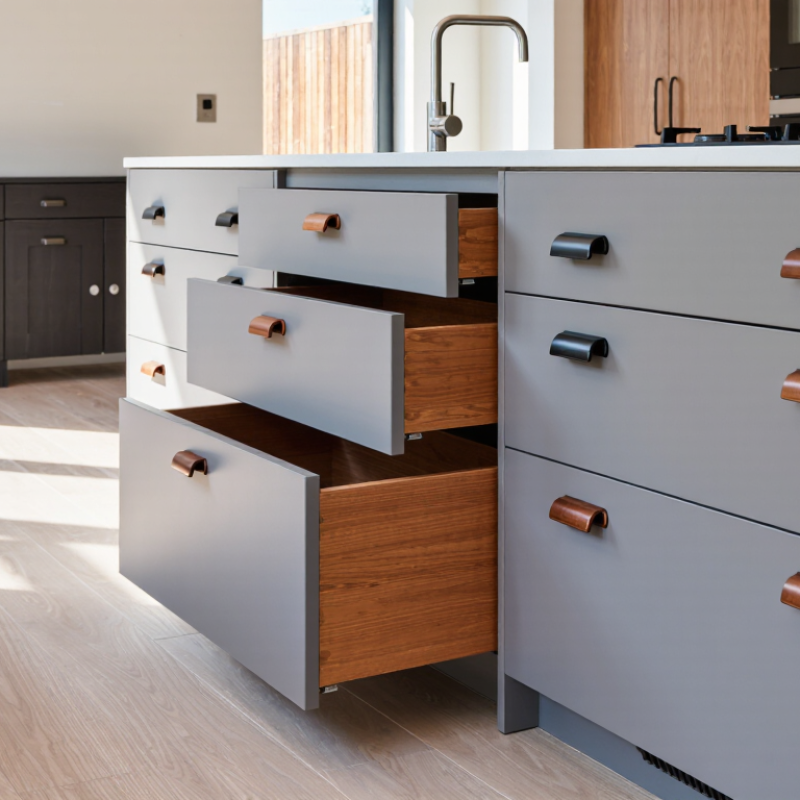
Furniture now serves more than one purpose. A kitchen island may become a worktop, while a bedroom cabinet hides charging cables and seasonal clothes. These changing routines are influencing hardware choices. Soft-close hinges, adjustable drawer dividers, and movable shelf supports help furniture adapt without a full redesign. Small details matter. A rail that shifts easily can make a compact room feel more useful.
Smart fittings add convenience, but they also bring trade-offs. Integrated lighting can help users find items in a deep cabinet, and touch-release catches can keep handles off a clean-lined surface. Yet extra mechanisms may need power, cleaning, or eventual repair. Not every drawer needs a sensor. Modular fittings can be more practical when parts are easy to adjust or replace, though the result may feel less seamless. That compromise deserves attention.
Tips: Before choosing hardware, measure what the furniture must hold and how often it will change. Test drawer movement with a realistic load, and check whether hinges allow simple adjustment. Keep controls within reach, especially in high-use areas. A clever fitting is only useful when it stays dependable. Sometimes the best upgrade is a sturdy, accessible shelf.
Conclusion
Modern furniture hardware trends are changing because homes are being renovated, household needs are evolving, and people are paying closer attention to how furniture is made and used. Hardware such as hinges, drawer slides, handles, and connectors does more than hold furniture together: it affects accessibility, durability, flexibility, and everyday convenience. With U.S. homeowners reporting a median renovation spend of $24,000 in 2023, upgrades to furniture and interiors are creating demand for fittings that work well and suit changing living spaces.
Sustainability and aging in place are also shaping design priorities. The 12.1 million tons of furniture waste recorded in the United States in 2018 highlights the value of durable, repairable, and reusable components. Meanwhile, many adults over 50 want to remain in their homes, increasing interest in hardware that makes furniture easier to reach and operate. Smart and modular fittings add further possibilities, allowing furniture to adapt to new uses, layouts, and household needs.

 Batul Hardware