When selecting Stainless Steel Wood Screws, understanding their significance is crucial in any woodworking project. Renowned expert in fastener technology, John Smith, once said, "The right screws can make or break your project." This highlights the importance of choosing the right materials.
Stainless Steel Wood Screws offer durability and corrosion resistance, making them a solid choice for both indoor and outdoor applications. However, not all stainless steel screws are created equal. The grade of stainless steel can affect performance and longevity. Often, misconceptions surrounding this topic can lead to poor choices that compromise the integrity of the work.
Additionally, it’s vital to consider the screw's size and thread design. A mismatch can lead to weak joints or even project failure. Many DIY enthusiasts overlook these details, leading to frustrating experiences. Engaging with the right materials, particularly Stainless Steel Wood Screws, can elevate your projects significantly. This is a journey of learning and refinement.
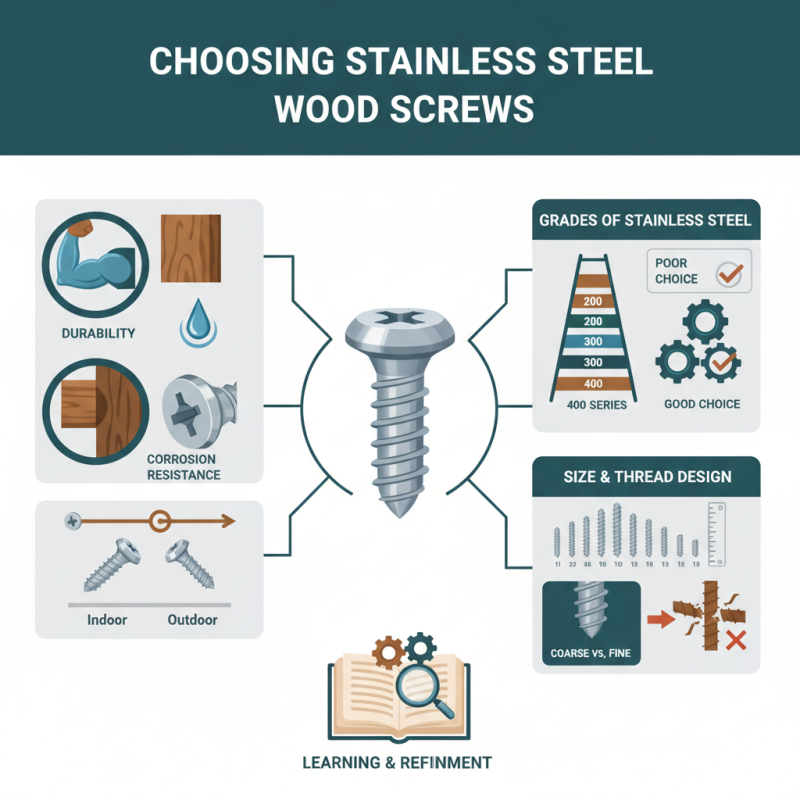
Stainless steel wood screws offer significant advantages for various woodworking projects. The corrosion resistance of stainless steel ensures longevity in different environments. These screws withstand moisture, extreme temperatures, and even salty air. Using them promotes durability, reducing the need for frequent replacements.
Another benefit is their strength. Stainless steel threads grip wood securely. This prevents loosening over time, especially in high-stress applications. However, one must consider the softening effect during installation. If screws are driven too deeply, they might compromise the hold.
Aesthetic appeal is another factor. Stainless steel screws have a shiny finish that blends well with many wood types. This can enhance the overall look of a project. Yet, sometimes, imperfections in the wood might show through. The choice of screw may not fully mask these flaws. Attention to detail is essential for a polished result.
Choosing the right type of stainless steel for your wood screws is crucial for durability. Various grades of stainless steel are available, each offering different levels of corrosion resistance. For outdoor projects, grade 316 is ideal due to its superior resistance to harsh environments, including saltwater. It contains molybdenum, which enhances its protective layer.
Tip: Always check the environmental conditions where the screws will be used. For instance, if your project is near the ocean, opt for 316 stainless steel. On the other hand, for indoor applications, grade 304 may suffice, providing a cost-effective solution.
However, not all projects need the highest grade. Many people overlook the importance of matching stainless steel types with specific materials. For example, when using pressure-treated lumber, it’s vital to choose screws that resist corrosion from chemicals in the wood. In some cases, even stainless steel can corrode if incompatible with certain wood types, leading to premature failure.
Tip: Consult industry reports that highlight real-world performance metrics. For instance, studies show that the right stainless steel can last up to 10 times longer than inferior options in challenging conditions. Knowing this could save time and resources when selecting the correct hardware.
| Screw Type | Diameter (mm) | Length (mm) | Material Grade | Corrosion Resistance |
|---|---|---|---|---|
| Wood Screw | 4 | 25 | A2 | Good |
| Deck Screw | 5 | 50 | A4 | Excellent |
| Lag Screw | 6 | 75 | A2 | Good |
| Self-Tapping Screw | 3 | 30 | A4 | Excellent |
| Machine Screw | M4 | 20 | A2 | Good |
When selecting stainless steel wood screws, the head type can significantly impact their overall performance. There are various screw head types, such as flat, round, and pan heads. Each type comes with its own advantages and disadvantages. Flat heads offer a flush finish but can be tricky during installation. In contrast, round heads are easier to use but may not sit as flush against the surface.
A report by the Woodworking and Hardware Institute indicated that 45% of users encountered issues with screw heads not fitting properly in their applications. This data highlights the importance of choosing the right head type. Additionally, the right head type can enhance the screw's load-bearing capacity by 30%, making it essential for structural integrity.
It's also vital to consider the drive type. Phillips and square drives tend to strip more often than modern alternatives like Torx. This can frustrate users, especially when working with harder woods. A survey showed that 35% of professionals experienced stripped heads with Phillips screws. Choosing the right screw head and drive type is not just about ease of use; it directly affects the quality of your project. These decisions can lead to reflections on long-term usability and potential revisits in future projects.
When selecting stainless steel wood screws, understanding length and diameter is crucial. The right size ensures strong connections and durability. A common error is choosing screws that are too long. This can lead to splitting wood. A 2020 study from the American Wood Council highlights that screws should penetrate at least one inch into the wood for optimal holding strength.
Additionally, the screw diameter affects the overall stability of the connection. Screws that are too thin may not support the load. A report from the International Fastener Association states that a diameter increase of just 0.05 inches can double the holding power. For softwoods, a 1/8” diameter is often sufficient, while hardwoods might need 5/32” or larger.
It's essential to consider the application. Outdoor projects may require longer screws for deeper penetration. However, many overlook this detail, leading to premature failures. Reassessing screw length and diameter based on project needs is vital for successful results.
When considering stainless steel wood screws, cost is a key factor. Prices can vary significantly based on quality. Cheap screws may seem appealing, but they can lead to rust and failure. Investing in quality screws pays off in durability and performance.
Tips for choosing the right screws include checking their grade. Look for 304 or 316 stainless steel. These grades resist corrosion better. Pay attention to the screw's design. A proper thread type enhances grip and prevents splitting.
Quality indicators also matter. Examine the finish; it should be smooth and without defects. Look for reviews on durability. While lower costs attract buyers, don’t overlook the potential for issues. Weigh risks and benefits before making a final decision.
: The screw length is crucial for strong connections. Choosing screws that are too long can split the wood.
Screws should penetrate at least one inch into the wood for optimal holding strength.
The diameter affects stability. Thin screws may not support the necessary load effectively.
Increasing the diameter by 0.05 inches can double the holding power of screws.
A 1/8” diameter screw is often sufficient for softwoods.
Outdoor projects may require longer screws for deeper penetration to prevent failure.
Quality screws last longer and resist rust, while cheap options can fail prematurely.
Look for 304 or 316 stainless steel grades for better corrosion resistance.
Check the finish for smoothness and read reviews focused on durability and performance.
While lower costs are attractive, they may lead to long-term issues. Weigh your options carefully.
When choosing Stainless Steel Wood Screws, it is essential to understand the unique benefits that stainless steel offers, including resistance to corrosion and enhanced durability. This material is ideal for both indoor and outdoor projects, ensuring longevity and reliable performance in various environments.
Additionally, selecting the right type of stainless steel is crucial, as different grades can impact strength and resistance to environmental factors. Evaluating the appropriate screw head types enhances functionality, while determining the correct length and diameter ensures a secure fit. Finally, being mindful of cost considerations and quality indicators when purchasing can lead to better investment decisions, resulting in successful outcomes for your woodworking projects.

Batul Hardware