Security-focused lockset hardware recommendations should begin with risk, not a product catalogue. A front door with a strong cylinder still fails when its strike plate uses short screws. A Grade 1 lock cannot compensate for a hollow door, weak framing, or careless key control. The FBI’s 2023 Crime Data Explorer recorded an estimated 847,522 burglary offenses in the United States. The figure declined, but the exposure remains substantial for homes, offices, and retail sites.
Physical security also connects with digital risk. NIST Cybersecurity Framework 2.0 treats physical access as part of broader organizational protection. That principle supports choosing hardware that matches the building’s actual threat profile. Mortise locks may suit heavy commercial doors. Grade 1 cylindrical locks can fit busy corridors. Electronic models need protected power, documented fail-safe settings, and reliable audit logs. Fire-rated doors require compatible, listed hardware. A stronger lock is not automatically a safer installation.
Bruce Schneier, security technologist and author, famously said, “Security is a process, not a product.” His warning applies directly here. Security-focused lockset hardware recommendations should therefore examine the complete opening: door material, frame strength, hinges, latch projection, key duplication, maintenance, and user behavior. I may overvalue ratings if I ignore daily misuse. I may also recommend expensive electronics where a reinforced strike and controlled keys would work better. Good advice stays practical, testable, and honest about those limits.
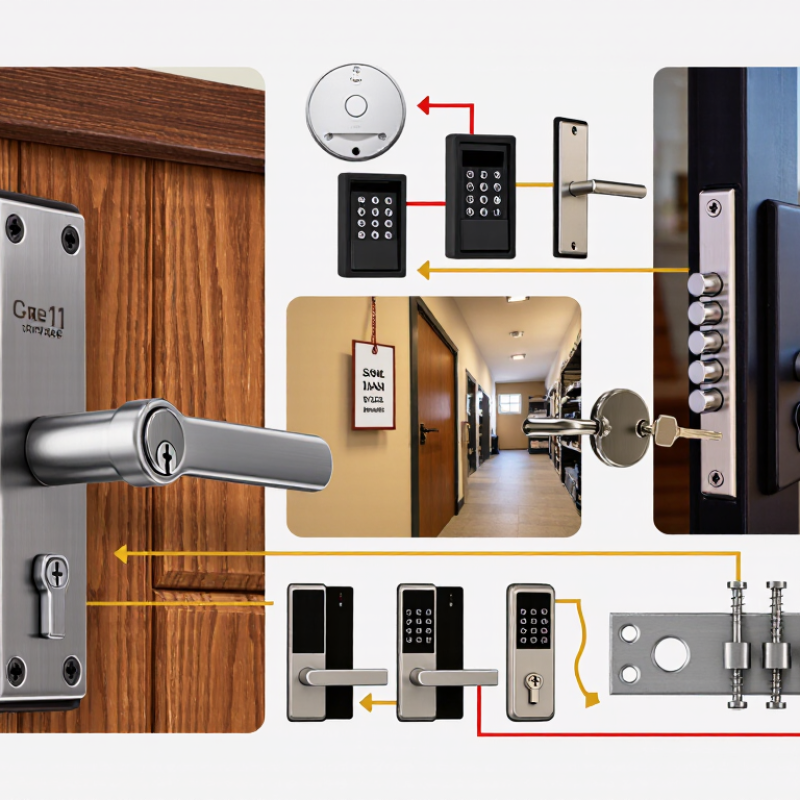
Security-focused lockset hardware should control entry, resist forced manipulation, and support safe daily use. Its purpose is narrower than a complete security system. A lock cannot compensate for a weak door, exposed hinges, or poor installation. The FBI Crime Data Explorer recorded more than 847,000 burglary offenses in the United States during 2023. That figure supports careful hardware selection, but it does not predict risk at every property.
Scope matters. A residential interior door needs different protection from a public entrance, storage room, or controlled workplace. ANSI/BHMA A156.2 classifies cylindrical locksets by Grades 1, 2, and 3. Grade 1 generally withstands higher use and abuse, while Grade 3 suits lighter-duty applications. These grades measure tested performance, not guaranteed invulnerability. A Grade 1 label is not a magic shield. Check the test standard, cycle rating, latch strength, and strike installation.
Protection levels should match realistic threats. A commercial entrance may need reinforced strikes, longer fasteners, protected cylinders, and clear emergency egress. A private bedroom may only require privacy functions and basic durability. Independent laboratory reports provide stronger evidence than packaging claims. The National Institute of Standards and Technology also emphasizes risk-based security planning, which supports this practical approach. Field inspections still reveal careless gaps, such as screws stopping in thin trim. That detail can undermine expensive hardware. Selection should therefore consider the door assembly, frame condition, traffic volume, maintenance access, and the people who use the opening every day.
Top Security Focused Lockset Hardware Recommendations
Core Components of a High-Security Lockset
A high-security lockset begins with a strong cylinder and a protected keyway. The cylinder should resist picking, drilling, forced rotation, and unauthorized key duplication. Key control matters. A controlled key system limits who can obtain replacements.
The deadbolt needs substantial throw length and solid internal construction. A short bolt may look impressive but offers limited resistance. I check whether the bolt enters the frame deeply without binding. Smooth movement matters.
The strike plate is equally important. Use a heavy-gauge plate with long screws reaching the structural framing. Decorative screws are not enough. The door frame often fails before the lock does.
A reinforced escutcheon can shield the cylinder from twisting attacks. It should fit tightly against the door surface. Loose hardware creates leverage. Small gaps deserve attention.
During inspections, I also examine the latch, hinges, door material, and frame alignment. A premium lockset cannot correct a weak or poorly fitted door. That is easy to overlook.
Fire-safety and building requirements should guide the installation. Follow the manufacturer’s technical instructions and local regulations. Incorrect fitting can reduce security and create access problems during emergencies.
I once underestimated hinge-side protection on an otherwise strong entry door. That was a useful correction. Security is a complete assembly, not one impressive component.
Security-focused lockset selection should begin with key control. The FBI Crime Data Explorer recorded 847,522 burglary offenses in 2022. That figure does not prove every incident involved a failed lock, but it supports tighter access management.
Use restricted keyways, documented key issuance, and rapid rekeying procedures. A key register should identify the holder, door, issue date, and return status. Avoid master-key systems with unnecessary levels. They increase convenience, but they also expand exposure. Cylinder design matters. Specify hardened inserts, anti-drill protection, controlled pinning, and resistance to unauthorized duplication. ANSI/BHMA A156.5 and A156.30 provide useful testing frameworks for cylinders and high-security components. Certification helps, though it is not a substitute for proper installation.
Forced-entry resistance depends on the entire opening, not the lock body alone. ANSI/BHMA A156.13 commercial mortise locks are commonly tested to one million operating cycles. That measures durability, not every attack condition. Use a reinforced strike, long structural screws, solid door construction, and protected hinges. A strong cylinder mounted in a weak frame is still a weak opening. I would not claim any lock is “impenetrable.” That wording is careless. Review the door, frame, hardware, and maintenance records together. Even the best recommendation can fail when screws loosen or keys circulate without control.
This illustrative 1–5 priority index reflects established security-design principles rather than brand or company performance data. Key control limits unauthorized duplication, robust cylinder design increases resistance to picking and manipulation, and hardened components help resist drilling and forced entry.
Top Security Focused Lockset Hardware Recommendations
Residential and commercial buildings need different lockset strategies. The FBI Crime Data Explorer recorded 847,522 burglary offenses in the United States during 2023. That figure supports layered protection, not simply stronger keys. A residential deadbolt with a reinforced strike plate suits many exterior doors. Cylindrical locksets work well for interior rooms and moderate traffic. Mortise locksets provide greater durability, but installation requires accurate door preparation. Simple is not weak.
Commercial properties face heavier traffic, stricter access control, and more complicated evacuation needs. ANSI/BHMA A156 standards distinguish performance requirements for cylindrical, mortise, and auxiliary locks. Mortise locksets suit offices, schools, and healthcare corridors because their cases resist repeated impact. Grade-rated cylindrical locks can reduce installation cost in lighter-duty areas. Electrified locksets add scheduling and audit functions, but they require reliable power and careful fail-safe planning. NFPA 101 also emphasizes maintaining compliant egress, so security hardware must never obstruct emergency exit routes.
Electronic access deserves careful comparison. The 2024 Verizon Data Breach Investigations Report found that human involvement appeared in 68% of breaches, although it does not measure door hardware directly. That finding still matters. Weak credentials, shared codes, and poor administration can undermine excellent hardware. Field assessments often reveal this gap. A high-security lock cannot compensate for an unmanaged access list. Mechanical keys remain practical during outages, while smart locks offer faster revocation and event records. The best specification depends on door use, occupancy, fire requirements, maintenance skill, and the consequences of failure.
| Lockset Type | Typical Security Level | Relevant Performance Standard | Primary Security Features | Best Residential Applications | Best Commercial Applications | Access Method Options | Installation Considerations | Key Limitations | Recommendation |
|---|---|---|---|---|---|---|---|---|---|
| Grade 1 Cylindrical Lever Lockset | High | ANSI/BHMA A156.2, Grade 1 | Heavy-duty chassis, reinforced strike area, interchangeable or removable core options, and strong latch assembly. | Main entry doors, multi-family housing, high-use interior security doors, and home offices. | Office buildings, schools, healthcare facilities, retail areas, and other high-traffic openings. | Keyed entry, interchangeable core, electronic keypad, card reader, or credential-based access control. | Usually fits standard bored-door preparations; verify door thickness, backset, strike alignment, and frame reinforcement. | Less resistant to concealed attack than a properly installed mortise lock; lever designs may be vulnerable to excessive force if the door frame is weak. | Strong general-purpose choice where durability, serviceability, and controlled access are required. |
| Grade 1 Mortise Lockset | Very High | ANSI/BHMA A156.13, Grade 1 | Large lock body inside the door, integrated deadlocking latch, robust case construction, and optional deadbolt or monitoring functions. | High-value residences, main entrances, home offices, and doors requiring frequent use. | Commercial entrances, hotels, hospitals, schools, government facilities, and high-security interior openings. | Keyed, interchangeable core, electrified trim, keypad, card reader, or integrated access-control hardware. | Requires a mortise pocket in the door and accurate preparation; professional installation is generally recommended. | Higher purchase and installation cost; replacement may require specialized parts and labor. | Best mechanical option for demanding commercial openings and premium residential entry doors. |
| Single-Cylinder Deadbolt | High | ANSI/BHMA A156.5; select a listed Grade 1 model when available | Long throw bolt, hardened or reinforced bolt design, anti-drill protection, security strike, and extended screws into structural framing. | Exterior residential doors, apartment entry doors, garages, and secondary perimeter doors. | Storage rooms, low-traffic exterior doors, utility spaces, and supplemental security locations. | Key outside and thumb turn inside; some versions support keypad or electronic control. | Security depends heavily on strike installation, door jamb strength, bolt length, and correct alignment. | Does not provide automatic latching; interior thumb turns can present an exit-security consideration in some locations. | Excellent supplemental security for residential doors when paired with a reinforced frame and strike. |
| Double-Cylinder Deadbolt | High | ANSI/BHMA A156.5; select a listed Grade 1 model when available | Key-operated bolt on both sides, reinforced strike, and resistance to operation through nearby glazing. | Doors with adjacent glass panels or locations where interior thumb-turn operation is not desired. | Restricted-use storage or equipment areas where authorized key control is required. | Key operation from both sides. | Must be evaluated against local fire, egress, and emergency-exit requirements before installation. | Can delay emergency egress and may create life-safety concerns if improperly used. | Use only where permitted by applicable building and fire codes and where controlled two-sided key access is necessary. |
| Grade 2 Cylindrical Knob or Lever Lockset | Moderate to High | ANSI/BHMA A156.2, Grade 2 | Standard commercial-duty latch, reinforced strike options, and compatibility with common door preparations. | Bedrooms, interior offices, side doors, and moderate-use residential entrances. | Small offices, low-traffic tenant spaces, residential common areas, and light-commercial applications. | Keyed entry, passage, privacy, keypad, or basic electronic variants. | Simple bored-door installation; confirm the strike is secured to structural framing rather than trim alone. | Generally lower abuse resistance and service life than Grade 1 hardware; knob versions offer less leverage control than levers. | Cost-effective for moderate-use openings that do not require maximum commercial durability. |
| Grade 1 Exit Device with Outside Trim | Very High | ANSI/BHMA A156.3, Grade 1 | Push-bar egress, dogging or latch-control options, reinforced chassis, and compatibility with fire-rated openings when properly listed. | Large residences, shared residential buildings, and doors requiring rapid emergency exit. | Schools, offices, assembly areas, retail premises, warehouses, and other high-occupancy buildings. | Push bar with keyed trim, keypad, card reader, or request-to-exit monitoring. | Door, frame, fire-rating, width, handing, and egress requirements must be verified before selection. | Usually unsuitable for standard residential doors; requires careful coordination with life-safety hardware and access control. | Preferred for commercial egress doors where controlled entry and fast exit must coexist. |
| Electrified Cylindrical or Mortise Lockset | High | Mechanical grade should be verified separately; electrical components should be listed for the intended application | Credential-controlled entry, monitoring contacts, request-to-exit sensing, remote unlocking, and mechanical key override options. | High-value homes, home offices, gated residential buildings, and properties requiring activity records. | Commercial offices, healthcare, education, multi-tenant buildings, and restricted areas. | Proximity credential, smart card, mobile credential, keypad, remote release, or mechanical key override. | Requires compatible power supplies, wiring, access-control programming, door-position monitoring, and backup procedures. | Higher complexity, ongoing maintenance, power dependency, and cybersecurity requirements for network-connected systems. | Best where access permissions, audit trails, and centralized management are more important than simple mechanical operation. |
| Keypad or Standalone Electronic Lockset | Moderate to High | Mechanical and electrical listings vary by product; verify applicable ANSI/BHMA compliance | PIN-based entry, automatic relocking, temporary codes, failed-attempt lockout, and optional audit capability. | Rental units, home offices, short-term access, side entrances, and households needing code sharing. | Small offices, storage rooms, staff-only doors, and locations without centralized access-control wiring. | PIN, credential, mobile application, mechanical key override, or combinations of these methods. | Plan for battery replacement, code administration, weather exposure, emergency override, and user privacy. | PIN sharing, weak user practices, battery failure, and limited integration can reduce real-world security. | Practical for controlled convenience, but choose models with strong mechanical construction and managed credentials. |
| Interchangeable-Core Lockset | High | ANSI/BHMA performance grade depends on the complete lockset | Rapid core replacement, controlled key systems, rekeying efficiency, and compatibility with institutional key management. | Multi-unit residences, home offices, and properties needing periodic rekeying. | Schools, hospitals, offices, property portfolios, and facilities with frequent staff turnover. | Controlled mechanical key, restricted keyway, electronic credential, or hybrid access. | Core format must match the lock body; key control policies and authorized replacement procedures are important. | Key control is only effective when issuance, duplication, lost-key response, and recordkeeping are properly managed. | Recommended for facilities where fast rekeying and centralized key administration are operational priorities. |
| Selection note: Actual security depends on the complete opening, including the door, frame, hinges, strike, fasteners, glass, installation quality, key or credential management, and compliance with applicable fire and egress codes. Performance grades and listings should be verified for the exact hardware configuration. | |||||||||
Choosing security-focused lockset hardware starts with the door, frame, and risk profile.
Select a lockset tested for the building’s environment and access needs. A heavy lockset cannot compensate for a weak frame. Measure door thickness, backset, and strike position before ordering. During installation, keep the latch centered in the strike opening. Use approved fasteners long enough to anchor the frame. Follow local safety and building requirements. Test the key or credential from both sides. The handle should return smoothly, without scraping. In field work, small alignment errors often create serious security weaknesses.
Tips:
Mark screw holes with the strike removed. Pre-drill carefully, then tighten screws evenly. Check that the latch extends fully when the door closes. Avoid forcing a stiff mechanism. It may hide a warped door. Record the installer, date, hardware type, and test results. Photographs of the strike and frame can support later inspections. Simple records improve accountability.
Maintenance should reflect use, weather, and traffic levels, not convenience alone.
Inspect loose trim, damaged cylinders, worn springs, and exposed fasteners. Clean with a suitable dry method unless approved lubrication is specified. Verify operation after every repair. For security performance verification, use a repeatable test sheet. Confirm full latch engagement, controlled egress, correct relocking, and stable operation across repeated cycles. Check the door under pressure with trained personnel and safe procedures. Compare results with the original acceptance criteria. I have seen teams approve a lock because it “felt solid.” That judgment was too subjective. No test is perfect. Review failures honestly, and revise the installation standard when evidence shows a gap.
Key control limits who can enter and when. Keep a register with the holder, door, issue date, and return status. Use rapid rekeying when keys are lost or staff changes occur. Small gaps matter.
Master-key systems improve convenience but expand access exposure. Use only the levels that operations genuinely require. Review permissions regularly, especially after personnel changes. Convenience is not security.
Consider hardened inserts, anti-drill protection, controlled pinning, and restricted keyways. Use systems that limit unauthorized key duplication. Testing and certification can support selection, but installation still matters. No cylinder is perfect.
No. Forced-entry resistance depends on the complete opening. Check the door, frame, strike, hinges, and fasteners together. A reinforced strike and long structural screws can strengthen the connection. A weak frame remains weak.
Measure door thickness, backset, and strike position before ordering. Confirm that the hardware suits the building environment and access needs. During installation, center the latch within the strike opening. Measure twice.
Small alignment errors can prevent full latch engagement. Use approved fasteners long enough to anchor the frame securely. Tighten screws evenly, and avoid forcing a stiff mechanism. It may conceal a warped door.
Inspect loose trim, damaged cylinders, worn springs, and exposed fasteners. Clean using a suitable dry method unless approved lubrication is specified. Test operation after every repair. Do not trust appearance alone.
Use a repeatable test sheet with clear acceptance criteria. Check full latch engagement, controlled egress, correct relocking, and stable repeated operation. Test the door under pressure with trained personnel and safe procedures. “Feels solid” is not enough.
Record the installer, date, hardware type, test results, and repair history. Photographs of the strike and frame can document installation conditions. Review failures honestly and revise standards when evidence shows a gap. Records reveal patterns.
Security-focused lockset hardware recommendations should begin with a clear understanding of the property’s purpose, risk level, and required protection. A high-security lockset typically combines a durable chassis, reinforced strike area, protected cylinder, controlled key system, and reliable internal components. Cylinder design and key control are especially important because they help limit unauthorized duplication and improve resistance to common forced-entry attempts. Selecting the right lockset also depends on whether it will serve a residence, office, retail space, or other commercial setting, as traffic levels and access requirements can vary significantly.
Proper installation is essential to achieving the lockset’s intended security performance. The door, frame, hinges, strike plate, and fasteners should work together as a complete system rather than being evaluated separately. Regular maintenance should include checking alignment, tightening hardware, inspecting wear, and confirming smooth operation. Periodic security verification can identify weaknesses early and ensure that the lockset continues to provide dependable access control, durability, and protection over time.

Batul Hardware